

Stainless Steel Regulators

Compare Stainless Steel Regulators
Match pressure reduction, integrated filtration or bi-directional flow control to your application. Compare the Type 52 family, 62SS, 66SS, 68SS and 72SS below, then review the model-specific technical literature.
Scroll horizontally to view every specification. The model column stays visible.
| Model / literature | Function | Stainless steel construction | Maximum inlet / working pressure | Selectable outlet ranges (psig) | Port sizes (in.; NPT) | Nominal flow (SCFM) | Filtration |
|---|---|---|---|---|---|---|---|
|
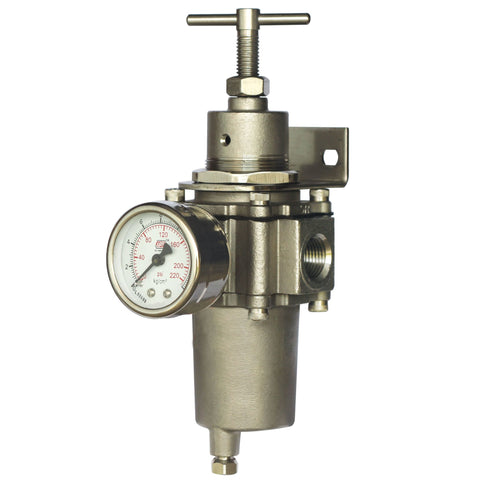
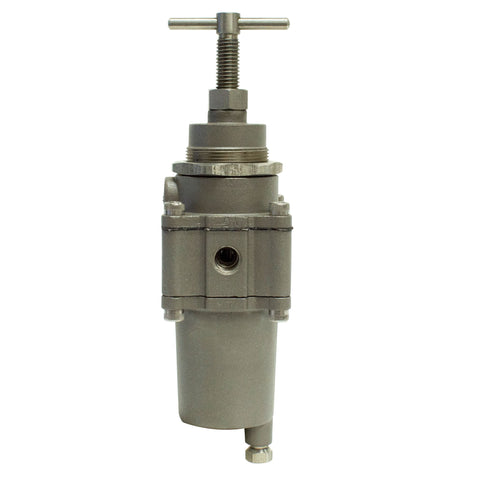
Type 52SSR Type 52SSR spec sheet (PDF) |
Pressure reduction | 316 housing and screen | 425 psig | 3-30; 6-60; 12-125; 15-150 |
1/4, 3/8, 1/2, 3/4, 1 |
38-400 A | No integral filter |
|
Type 52SSFR Type 52SSFR spec sheet (PDF) |
Pressure reduction + manual-drain filtration | 316 housing and filter assembly | 425 psig | 3-30; 6-60; 12-125; 15-150 |
1/4, 3/8, 1/2, 3/4, 1 |
38-400 A | 25 microns standard; 5 microns optional |
|
Type 52SSAR Type 52SSAR spec sheet (PDF) |
Pressure reduction + automatic-drain filtration | 316 housing and filter assembly | 425 psig | 3-30; 6-60; 12-125; 15-150 |
1/4, 3/8, 1/2, 3/4, 1 |
38-400 A | 25 microns standard; 5 microns optional |
|
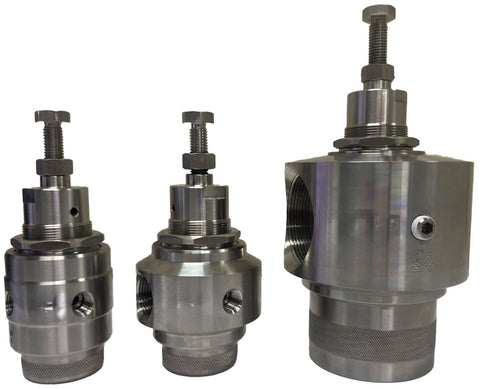
Type 62SS Type 62SS spec sheet (PDF) |
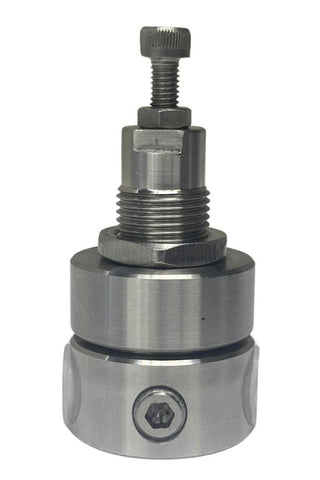
Direct-acting pressure reduction | 316L body and bonnet; internal grade depends on port size | 435 psig | 3-30; 6-60; 12.5-125; 15-150; 25-250 |
1/4, 3/8, 1/2, 3/4, 1, 1-1/2, 2 |
82-525 B | No integral filter specified |
|
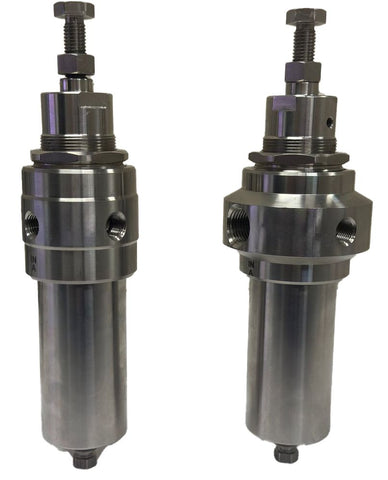
Type 66SS Type 66SS spec sheet (PDF) |
Direct-acting pressure reduction + filtration | 316L body, bonnet and bowl; 316 filter element |
435 psig manual drain; 150 psig automatic drain |
3-30; 6-60; 12.5-125; 15-150; 25-250 D |
1/4, 3/8, 1/2, 3/4 |
74-340 B | 25 microns standard; 5 or 40 microns optional |
|
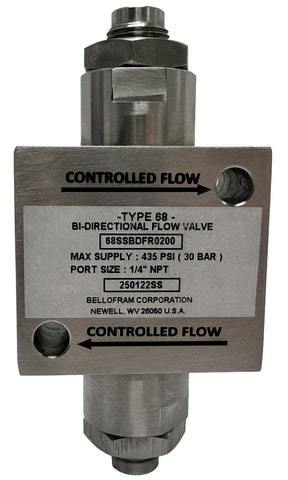
Type 68SS Type 68SS spec sheet (PDF) |
Independent flow control in each direction | 316L / 316 components; see material notes | 174 psi (12 bar) maximum working pressure E |
Not a pressure-reducing regulator | 1/4, 3/8, 1/2 | 22-71 C | No integral filter specified; use filtered air |
|
Type 72SS Type 72SS spec sheet (PDF) |
Sub-miniature direct-acting pressure reduction | 316L body and bonnet; 316 internal parts |
435 psi | 1-10; 3-30; 5-50; 10-100; 15-150 |
1/8, 1/4 | 17-20 B | No integral filter specified |
Compare the function first. Type 52SSR, 62SS and 72SS reduce downstream pressure. Type 52SSFR, 52SSAR and 66SS add filtration. Type 68SS controls actuator or cylinder speed through independent flow adjustment in each direction.
Flow test conditions: A: 100 psig supply and 20 psig outlet. B: 150 psi inlet, 87 psi set pressure and a 14.5 psi drop from set. C: 85 psi supply and a 14.5 psi differential. Flow ratings use different test conditions and should not be compared as identical operating points.
D: The 250 psig outlet option applies to suitable manual-drain Type 66SS configurations. Automatic-drain models have a 150 psig maximum inlet; the outlet must be selected below the available inlet pressure. Verify the complete part number and operating differential.
E: The current Type 68SS spec sheet and technical data list 174 psi (12 bar) maximum working pressure. Its instruction manual rounds this to 175 psi (12 bar). It does not provide an adjustable regulated outlet-pressure range.
View flow ratings by port size
- Type 52SSR / SSFR / SSAR (A): 1/4 in.: 38; 3/8 in.: 42; 1/2 in.: 95; 3/4 in.: 105; 1 in.: 400 SCFM.
- Type 62SS (B): 1/4 in.: 82; 3/8 in.: 173; 1/2 in.: 218; 3/4 in.: 360; 1 in.: 480; 1-1/2 in.: 500; 2 in.: 525 SCFM.
- Type 66SS (B): 1/4 in.: 74; 3/8 in.: 173; 1/2 in.: 192; 3/4 in.: 340 SCFM.
- Type 68SS (C): 1/4 in.: 22; 3/8 in.: 45; 1/2 in.: 71 SCFM.
- Type 72SS (B): 1/8 in.: 17; 1/4 in.: 20 SCFM.
View material and selection notes
The Type 62SS detailed spec table lists 316L body and bonnet components, with 316 internal parts on the 1/2 in. and 3/4 in. versions. The Type 66SS uses a 316 filter element with 316L body, bonnet and bowl components. The Type 68SS spec sheet and instruction manual list 316L / 316 components. The Type 72SS detailed spec table lists 316L body and bonnet components with 316 internal parts. A 316L product-family name should not be read as a guarantee that every component uses the same alloy.
Match the exact model and options to the media, inlet pressure, outlet requirement, flow, temperature, port thread, elastomers, filtration, cleaning requirements and applicable material standards. Use the linked technical literature for final selection.
Stainless Steel Regulators for Corrosive and Demanding Applications
Bellofram Precision Controls offers a specialized range of stainless steel pressure regulators and filter-regulators designed for reliable pressure control in corrosive, caustic, clean-gas, industrial, and process applications. Available configurations include pressure-reducing regulators, filter-regulators, automatic-drain filter-regulators, and bi-directional flow regulators.
Bellofram stainless steel regulators are available in 316 and 316L stainless steel configurations. The Type 52 family uses rugged 316 stainless steel construction for applications including sour gas, offshore oil and gas, petrochemical systems, and other corrosive environments. Selected Type 62SS, Type 66SS, Type 68SS, and Type 72SS products use 316L stainless steel construction for applications where enhanced corrosion resistance and material compatibility are important.
Available products support applications ranging from instrument and sampling panels to chemical processing, specialty gas handling, medical and biomedical gases, pharmaceutical processing, food and beverage equipment, actuator control, and other systems requiring corrosion-resistant pneumatic pressure or flow control.
Why Choose Bellofram Stainless Steel Regulators?
Corrosion-Resistant Construction: Choose from 316 and 316L stainless steel regulator configurations designed for demanding environments and applications where material compatibility is a critical consideration.
Precision Pressure Control: Bellofram stainless steel pressure-reducing regulators provide controlled downstream pressure across a range of inlet pressures, flow requirements, port sizes, and operating conditions.
Integrated Filtration Options: Type 52 and Type 66SS configurations combine pressure regulation with filtration to help remove particulate contamination before air or compatible gas reaches downstream equipment. Explore our stainless steel filters for dedicated particulate filters and combined filter-regulator options.
Wide Pressure and Port Options: Available stainless steel regulator families cover multiple pressure ranges and port sizes, allowing engineers to match the regulator to the pneumatic requirements of the application.
Clean-Gas and Medical Options: Selected 316L stainless steel regulators are available with oxygen-cleaning options for appropriate clean-gas, medical, biomedical, and specialty-gas applications.
Corrosive and Sour-Gas Applications: The Type 52 stainless steel regulator family provides configurations designed for sour gas, offshore oil and gas, petrochemical service, and other corrosive operating environments.
316 and 316L Stainless Steel Pressure Regulation
Bellofram offers both 316 stainless steel regulators and 316L stainless steel regulators. The appropriate material depends on factors such as the process media, corrosive exposure, operating temperature, cleaning requirements, pressure, and application-specific material standards.
The Type 52 stainless steel family uses 316 stainless steel construction and includes standard regulator and filter-regulator configurations. Bellofram's 316L product families provide additional options for applications involving corrosive or caustic media, industrial and specialty gases, instrumentation, medical systems, pharmaceutical processing, and food and beverage equipment.
Find the Right Stainless Steel Regulator
Selecting the right stainless steel pressure regulator depends on required outlet pressure, maximum inlet pressure, flow capacity, port size, process media, operating temperature, filtration requirements, stainless steel grade, elastomer compatibility, mounting method, and any oxygen-cleaning or application-specific requirements.
Explore the Bellofram stainless steel regulators above to compare pressure-reducing, filter-regulator, automatic-drain, and flow-control configurations. Bellofram Precision Controls can also assist with identifying a regulator for specialized OEM, industrial, medical, gas-handling, or process-control applications.
Stainless Steel Pressure Regulator FAQs
Why use a stainless steel pressure regulator?
Stainless steel pressure regulators are often selected when corrosion resistance, material compatibility, cleanliness, or resistance to demanding process conditions is important. Applications can include chemical processing, specialty gases, instrumentation, medical systems, pharmaceutical processing, food and beverage equipment, and corrosive industrial environments.
What is the difference between 316 and 316L stainless steel regulators?
Both 316 and 316L stainless steel provide strong corrosion resistance. 316L contains less carbon, which can provide advantages in applications involving welding or certain corrosive environments. Bellofram offers both 316 and 316L stainless steel regulator configurations depending on the product family and application requirements.
Are all Bellofram stainless steel regulators made from 316L stainless steel?
No. The Type 52 stainless steel regulator family uses 316 stainless steel, while selected Type 62SS, Type 66SS, Type 68SS, and Type 72SS products use 316L stainless steel construction. Individual product specifications should be reviewed when a specific stainless steel grade is required.
What is the Bellofram Type 62SS pressure regulator?
The Type 62SS is a direct-acting diaphragm pressure-reducing regulator designed for applications where corrosion-resistant pressure control is preferred or required. It uses 316L stainless steel construction and is available in multiple port sizes and pressure ranges for industrial, specialty gas, medical, pharmaceutical, and process applications.
Does Bellofram offer stainless steel filter-regulators?
Yes. Bellofram offers stainless steel filter-regulators including Type 52 configurations and the Type 66SS. These products combine particulate filtration with downstream pressure regulation in a single assembly.
What is the Type 66SS stainless steel filter-regulator?
The Type 66SS combines a direct-acting pressure-reducing regulator with stainless steel particulate filtration. It is supplied with a 25-micron stainless steel filter and is designed for air and compatible industrial or medical gas applications where corrosion-resistant filtration and pressure control are required.
Are stainless steel regulators available for sour gas applications?
Yes. Bellofram Type 52 stainless steel regulators are designed for sour gas, offshore oil and gas, petrochemical, and other corrosive environments. Selected Type 52 products are constructed to comply with applicable NACE material requirements identified in their product specifications.
Can Bellofram stainless steel regulators be used with medical or clean gases?
Selected Bellofram stainless steel regulators are intended for medical, biomedical, clean-gas, and specialty-gas applications. Oxygen-cleaning options are available on selected products. The regulator materials, elastomers, cleaning requirements, pressure range, and gas compatibility should be verified for the specific application.
What is a stainless steel bi-directional flow regulator?
A bi-directional flow regulator controls flow independently in each direction through a pneumatic circuit. Bellofram's Type 68SS uses stainless steel construction and is designed for applications such as actuator or cylinder speed control, instrument systems, and other installations requiring corrosion-resistant pneumatic flow control.
How do I choose the right stainless steel pressure regulator?
Selection should consider inlet pressure, required outlet pressure, flow capacity, process media, port size, operating temperature, stainless steel grade, filtration requirements, elastomer compatibility, mounting method, and any cleaning, NACE, medical, or application-specific requirements.
