Engineering That Works
Precision Pressure Control Engineering That Works
Bellofram Precision Controls engineers and manufactures pneumatic and electropneumatic products for applications where accuracy, pressure stability, repeatability, and reliable control are important to system performance.
Our pressure-control technologies are designed to maintain consistent performance as operating conditions change. Applications can be affected by variations in supply pressure, flow demand, ambient temperature, load, control signal, and other process conditions, so selecting the right regulator, relay, transducer, controller, or actuator begins with understanding the complete application.
Bellofram Precision Controls supports applications with mechanical pressure regulators, air relays and volume boosters, I/P and E/P transducers, servo pressure controllers, filter-regulator- lubricators, diaphragm air cylinders, stainless steel pressure-control products, and custom pneumatic solutions.
Engineering for Pressure Stability and Precision Control
A pressure-control component must do more than reach a desired pressure setting. The system may also need to maintain that setting as upstream pressure changes, downstream flow varies, equipment cycles, or surrounding operating conditions change.
Bellofram products are engineered for applications requiring controlled pneumatic pressure, signal conversion, pressure amplification, high-flow response, or diaphragm-based actuation. The appropriate solution depends on factors such as supply pressure, desired output range, flow requirement, sensitivity, accuracy, port size, materials, control signal, mounting, and environmental conditions.
Mechanical Pressure Regulator Engineering
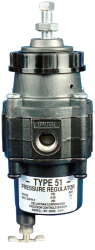
Bellofram precision pressure regulators are used to reduce and control pneumatic pressure across industrial and OEM applications. Available product families address requirements ranging from compact pressure regulation to high-flow service, sensitive low-pressure control, stainless steel construction, and specialized pressure ranges.
Regulator selection should consider more than inlet and outlet pressure. Flow capacity, droop, relief requirements, port size, media compatibility, materials, mounting, and expected operating conditions can all affect the performance of the finished system.
Air Relays and Volume Boosters
Pneumatic relays and volume boosters can be used where a control signal must be reproduced, amplified, or supported with greater pneumatic flow capacity.
Depending on the product and application, Bellofram air relays and boosters can support pressure-control systems requiring specific pressure ratios, supply pressures, output ranges, port sizes, flow characteristics, or response requirements.
Electropneumatic Transducers and Servo Pressure Controllers
Bellofram I/P and E/P transducers convert compatible electrical control signals into proportional pneumatic pressure outputs, allowing electronic control systems to interface with pneumatic processes and equipment.
Servo pressure controllers provide another approach where electronically controlled pneumatic pressure and closed-loop regulation are required. Application requirements can include input-signal type, supply pressure, output pressure range, accuracy, flow, feedback, port size, and control-system integration.
Diaphragm Air Cylinder Engineering
Bellofram diaphragm air cylinders convert pneumatic pressure into linear mechanical force and motion without relying on a conventional sliding piston seal.
Standard, Super, and Small Bore cylinder families support a range of industrial actuation requirements. Selection can involve required force, available air pressure, stroke length, equivalent bore diameter, mounting, dimensional constraints, and whether single- or double-acting operation is needed.
Custom Pneumatic and Electropneumatic Engineering
When a standard product does not fully match the application, Bellofram Precision Controls can work directly with customer engineering teams to evaluate a custom solution.
Custom engineering can begin with an established Bellofram technology and adapt it around the actual operating requirements. Depending on the product family, variables may include supply pressure, outlet pressure, flow capacity, pressure ratio, port size, electrical signal, accuracy, materials, stroke, force, mounting, and packaging constraints.
A custom project does not necessarily require an entirely new product. In some applications, an existing platform can be adapted through different pressure ranges, ports, electrical signals, materials, flow characteristics, or mechanical configurations.
Engineering Support for OEM Applications
OEM pressure-control applications often require components to fit within established dimensions, interface with an existing control system, and deliver repeatable performance across production equipment.
Bellofram Precision Controls supports OEM applications across industries including assembly and manufacturing, automotive and transportation, food and beverage, HVAC, medical equipment, metal forming, oil and gas, pulp and paper, renewable energy, and water and wastewater.
Providing the application requirements early in the design process helps determine whether a standard configuration, modified product, or more specialized engineered solution is appropriate.
What Information Helps Define a Pressure-Control Solution?
Useful engineering information can include available supply pressure, required output pressure, flow capacity, media, port size, electrical input signal, required accuracy, operating temperature, available space, mounting requirements, actuation force, stroke, and environmental conditions.
It is also helpful to identify the operating problem the component must solve, including pressure fluctuations, changing flow demand, packaging limitations, response requirements, or performance that cannot be achieved with the existing component.
Quality and Testing
Bellofram Precision Controls states that its products are produced and tested according to rigorous in-house procedures before shipment. Its quality-management system is certified to ISO 9001:2015.
Quality requirements are especially important in precision pressure-control applications because component performance can directly affect the repeatability and stability of the larger machine or process in which the product is installed.
From Application Requirements to a Working Solution
Selecting the right pneumatic component begins with the function the system must perform. Determine whether the application requires pressure reduction, pressure amplification, increased flow, electrical-to-pneumatic signal conversion, closed-loop pressure control, air preparation, or pneumatic actuation.
From there, Bellofram Precision Controls can help evaluate the required pressure range, flow, accuracy, materials, signal, mounting, actuation, and environmental requirements to identify an appropriate standard or custom pressure-control solution.
Precision Pressure Control Engineering FAQs
What does Bellofram Precision Controls engineer?
Bellofram Precision Controls engineers and manufactures pneumatic and electropneumatic products including pressure regulators, air relays and volume boosters, I/P and E/P transducers, servo pressure controllers, filter-regulator-lubricators, diaphragm air cylinders, and related pressure-control products.
What is precision pressure control?
Precision pressure control involves regulating pneumatic pressure to a required value while maintaining appropriate accuracy and stability as operating conditions such as supply pressure and flow demand change.
What operating conditions can affect pneumatic pressure regulation?
Conditions can include changes in supply pressure, downstream flow, ambient temperature, load, media, control signal, and other process variables. The importance of each factor depends on the application and selected product.
What types of pressure regulators does Bellofram offer?
Bellofram offers mechanical pressure-reducing regulators for a range of pressure, flow, size, material, and application requirements, including precision and stainless steel regulator options.
What is a pneumatic air relay?
A pneumatic air relay uses a pneumatic input signal to control a corresponding output pressure. Depending on the design, a relay can reproduce or modify the relationship between input and output pressure.
What is a volume booster?
A volume booster increases pneumatic flow capacity in response to a control pressure signal. It can be used where the controlling device provides the desired pressure signal but does not provide enough flow for the downstream equipment.
What is an I/P or E/P transducer?
An I/P or E/P transducer converts a compatible electrical input signal into a proportional pneumatic pressure output, allowing electronic control systems to interface with pneumatic equipment.
What is a servo pressure controller?
A servo pressure controller electronically regulates pneumatic output pressure using a control signal and feedback. The specific pressure, flow, accuracy, signal, and feedback capabilities depend on the selected controller.
What is a diaphragm air cylinder?
A diaphragm air cylinder converts pneumatic pressure into linear force and movement through a flexible diaphragm. Bellofram offers multiple diaphragm-cylinder families for different force, stroke, size, and mounting requirements.
Does Bellofram Precision Controls offer custom engineering?
Yes. Bellofram Precision Controls works with customer engineering teams to evaluate custom pneumatic and electropneumatic solutions when a standard product does not fully meet the application requirements.
What products can Bellofram customize?
Custom engineering can support mechanical pressure regulators, air relays and volume boosters, transducers, servo pressure controllers, and diaphragm air cylinders. Available customization depends on the product family and application.
Does a custom solution always require a completely new design?
No. An existing Bellofram platform may be adaptable through different pressure ranges, flow characteristics, ports, electrical signals, materials, mounting, dimensions, or other configuration changes.
What information should I provide for a custom pressure-control application?
Useful information includes supply pressure, desired output pressure, required flow, media, port size, electrical signal, accuracy, operating temperature, available space, mounting, environmental conditions, and any performance requirement that a standard product does not meet.
What information is useful for a custom diaphragm air cylinder?
Useful information includes required force, available air pressure, stroke length, equivalent bore diameter, mounting requirements, dimensional constraints, and whether single- or double-acting operation is needed.
Does Bellofram work with OEM engineering teams?
Yes. Bellofram Precision Controls supports OEM applications and can evaluate pressure-control, signal-control, and pneumatic-actuation requirements around the equipment's performance and packaging needs.
What industries use Bellofram Precision Controls products?
Applications include assembly and manufacturing, automotive and transportation, food and beverage, HVAC, medical equipment, metal forming, oil and gas, OEM equipment, pulp and paper, renewable energy, and water and wastewater systems.
Is Bellofram Precision Controls ISO 9001 certified?
Yes. Bellofram Precision Controls states that its quality-management system is certified to ISO 9001:2015.
Are Bellofram Precision Controls products tested before shipment?
Bellofram Precision Controls states that its products are produced and tested according to rigorous in-house procedures before shipment.
How do I choose the right Bellofram pressure-control product?
Start with the required function, such as pressure reduction, increased pneumatic flow, signal conversion, servo pressure control, air preparation, or pneumatic actuation. Then compare supply pressure, output range, flow, accuracy, signal, materials, mounting, dimensions, and environmental requirements with the specifications of the available product families.
When should I consider a custom pneumatic solution?
A custom solution may be appropriate when standard products cannot meet the required pressure, flow, accuracy, electrical interface, materials, dimensions, mounting, actuation, or environmental requirements of the application.