News
Hygienic Design Meets Lasting Performance with the Type 62 Stainless Steel Regulator
Why Pressure Regulation Matters in Food and Beverage Production
In food and beverage production, consistency and cleanliness are not optional. They are requirements.
From automated filling lines to ingredient blending and clean-in-place (CIP) systems, every process depends on stable, reliable pressure control. When that control breaks down, it does not just affect performance. It can impact product quality, uptime, and even safety.
That is why pressure regulation plays such a critical role in modern food processing environments.
The Hidden Risk in Harsh Processing Environments
Food and beverage facilities are some of the most demanding operating environments for pneumatic components.
Equipment is constantly exposed to:
• Moisture and humidity
• Frequent cleaning cycles
• Cleaning chemicals and sanitizing agents
• High-temperature steam during washdowns
Over time, these conditions begin to wear down standard regulators, especially those made from aluminum or plated materials.
The result is not always immediate failure. It is a gradual degradation.
• Corrosion begins to form
• Pressure stability starts to drift
• Internal components lose integrity
• Maintenance intervals become shorter
Eventually, what started as a minor issue becomes a larger operational risk.
Why Inconsistent Pressure Is a Bigger Problem Than It Seems
In food production, pressure is tied directly to process consistency.
If pressure fluctuates, it can affect:
• Filling accuracy in packaging lines
• Mixing ratios in blending systems
• Flow control in ingredient delivery
• Performance of clean-in-place systems
At the same time, unplanned maintenance or equipment replacement creates downtime that production lines cannot afford.
The challenge is clear. Manufacturers need a solution that maintains consistent pressure while standing up to aggressive, hygiene-critical conditions.
A Regulator Built for Clean Manufacturing Environments
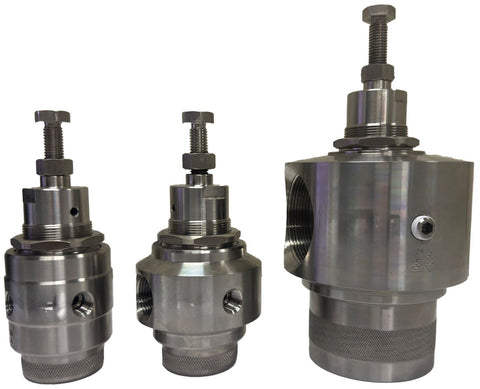
The Type 62SS Stainless Steel Pressure Regulator is designed specifically for these demands.
Instead of relying on coated or plated materials, it is constructed entirely from 316L stainless steel bar stock, providing:
• Long-term durability across continuous operation
• Easy cleanability for washdown and sanitation processes
• Superior corrosion resistance in wet and chemical-heavy environments
This is not just about material selection. It is about maintaining performance over time.
Because when corrosion is eliminated, pressure stability follows.
Reliable Performance Across the Entire Process
Food production systems require flexibility. Different applications demand different pressure ranges, flow capacities, and installation configurations.
The Type 62SS is built to integrate seamlessly into these environments, supporting:
• Inlet pressures up to 435 PSIG
• Operation from −76°F to +176°F
• Output pressure ranges up to 250 PSIG
• Multiple port sizes from ¼" to 2" NPT
This allows it to perform reliably across:
• Blending systems
• Filling and packaging lines
• Air and inert gas control
• Clean steam and sanitation processes
Optional oxygen cleaning further supports use in sanitary air and gas systems where cleanliness requirements are elevated.
Reducing Maintenance While Improving Uptime
One of the biggest advantages of an all-stainless design is not just durability. It is predictability.
By resisting corrosion and maintaining internal integrity, the Type 62SS helps:
• Extend service intervals
• Reduce unexpected failures
• Minimize maintenance disruptions
• Support consistent production output
In high-throughput environments, that reliability translates directly into operational efficiency.
Built for the Future of Food Manufacturing
Food and beverage production is evolving.
Facilities are becoming more automated. Sanitation standards are becoming more stringent. Equipment is expected to run longer with less intervention.
In this environment, components must do more than function. They must perform consistently over time, with minimal maintenance.
The Type 62SS is built for that future.
Its all-stainless construction supports global food safety requirements, while its durability helps reduce corrosion-related downtime and extend equipment life.
See How Hygienic Design Improves Long-Term Performance
Want a closer look at how pressure regulation impacts cleanliness, reliability, and uptime in food and beverage production?
The full application study breaks down the challenges, environmental conditions, and how the Type 62SS delivers consistent performance in hygiene-critical systems.
Download the Application Study to explore how stainless steel design improves pressure control and reduces maintenance in demanding production environments.
Common Questions About the Type 62SS and Hygienic Pressure Regulation
Why is pressure regulation important in food and beverage production?
Pressure regulation is important in food and beverage production because stable pressure helps maintain filling accuracy, blending consistency, ingredient flow, clean-in-place system performance, and overall process reliability.
Why are stainless steel regulators used in hygienic washdown environments?
Stainless steel regulators are used in hygienic washdown environments because they resist corrosion from moisture, cleaning chemicals, sanitizing agents, and high-temperature steam. This helps maintain pressure stability and reduce maintenance in demanding production areas.
What makes the Type 62SS suitable for food and beverage applications?
The Type 62SS is constructed from 316L stainless steel bar stock, making it well suited for wet, chemical-heavy, and hygiene-critical environments. Its corrosion resistance, cleanability, pressure range options, and durable construction help support long-term performance in food and beverage systems.
How does corrosion affect pressure regulator performance?
Corrosion can affect pressure regulator performance by damaging internal components, reducing pressure stability, increasing drift, shortening service intervals, and creating a higher risk of unexpected maintenance. In hygienic production environments, corrosion can also create cleaning and reliability concerns.
Where can the Type 62SS be used in food production systems?
The Type 62SS can be used in blending systems, filling and packaging lines, air and inert gas control, ingredient delivery, clean steam processes, and sanitation-related systems where stable pressure and corrosion resistance are important.
How does the Type 62SS help reduce maintenance?
The Type 62SS helps reduce maintenance by resisting corrosion and maintaining internal integrity over time. This can help extend service intervals, reduce unexpected failures, minimize maintenance disruptions, and support consistent production output.
What does 316L stainless steel provide in pressure control applications?
316L stainless steel provides strong corrosion resistance, durability, and cleanability in pressure control applications. For food and beverage environments, it helps components stand up to moisture, washdowns, sanitizing chemicals, and demanding operating conditions.
Can the Type 62SS support sanitary air and gas systems?
Yes. The Type 62SS can support air and inert gas control applications, and optional oxygen cleaning can further support use in sanitary air and gas systems where cleanliness requirements are elevated.